.jpg)
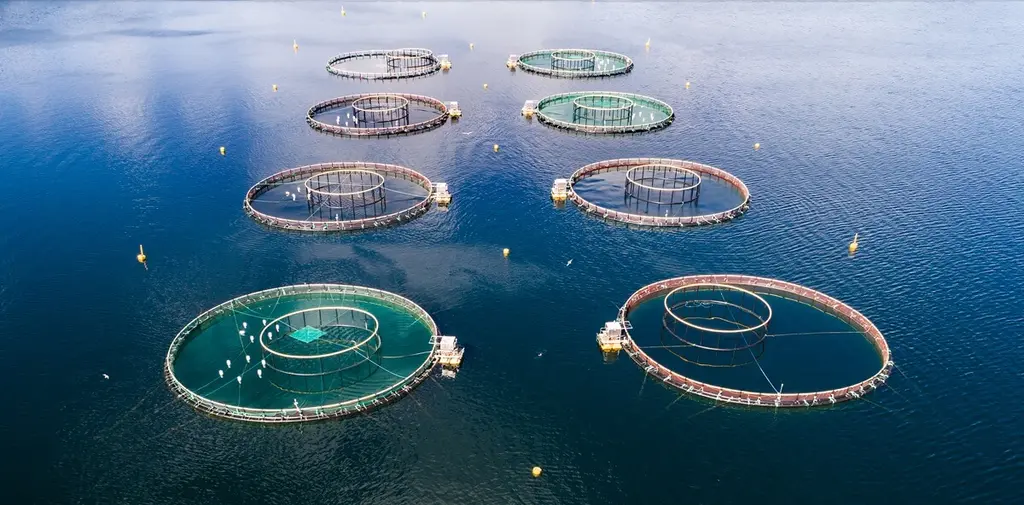
Aquaculture Magazine has republished a summary of Abigail John Onomu and Grace Emily Okuthe’s 2024 review, The Role of Functional Feed Additives in Enhancing Aquaculture Sustainability, originally published in Fishes. The review is not a black soldier fly paper. Its central categories are probiotics, prebiotics, symbiotics and phytogenics. That is precisely why it is useful for the insect sector.
The article describes functional feed additives as dietary inputs used not only to meet basic nutrition, but to improve growth, immunity, feed efficiency, disease resistance, water quality or economic performance. It also repeats a hard commercial fact for aquaculture nutrition: feed commonly represents 40 to 60% of production expenses, while disease, antibiotic pressure, fishmeal dependence and nutrient-rich effluents remain structural constraints for intensive systems.
For BSF producers, the important question is not whether Hermetia illucens belongs neatly inside the same category as a probiotic strain, a mannan oligosaccharide, garlic extract or beta-glucan. It does not. The more useful question is whether BSFL meal and derived fractions can be sold against the same problems that functional feed additives are meant to solve.
From replacement ingredient to formulation tool
Most insect meal marketing still leans on fishmeal replacement. That is understandable, but strategically limiting. Fishmeal replacement puts BSFL meal into a commodity comparison: crude protein, digestible amino acids, lipid level, ash, palatability, price per tonne and inclusion ceiling. The buyer then asks whether it can replace 10%, 25% or 50% of fishmeal without damaging growth or feed conversion.
The functional additive frame asks a different question: can a smaller, better-defined inclusion improve the performance of a diet that is already under stress?
That matters because the current aquafeed problem is not simply that fishmeal is expensive. Modern diets are already complex blends of marine ingredients, soy, wheat, corn gluten, pea protein, oils, mineral premixes, enzymes, emulsifiers, attractants and health additives. A new ingredient has to justify its place inside that architecture. If BSFL meal is only a protein substitute, it competes directly against every other protein source. If it contributes measurable gut, immune or disease-resilience effects at low inclusion, it can sit in the formulation as a performance tool.
The recent rainbow trout work is a good example. In Insect Larvae Meal as a Complementary Functional Ingredient in High Soybean Meal-Based Diets Improve the Health of Rainbow Trout, researchers tested soybean meal-based diets supplemented with 2.5% and 5% whole-body or defatted BSFL. The study reported improved gut health, immune response and survival after Flavobacterium psychrophilum challenge compared with the soybean meal diet, with the strongest survival signal in the 5% whole-body BSFL group. Lauric acid levels also increased dose-dependently in fish fed BSFL diets.
That is commercially different from arguing that BSFL meal should replace fishmeal at high inclusion. A 2.5 to 5% functional inclusion is easier to price, easier to test, and easier to integrate into feeds where marine ingredient reduction has already pushed the diet close to physiological limits.
The bioactive argument has to be specific
The insect sector often mentions chitin, antimicrobial peptides and lauric acid as if their presence alone proves functionality. Feed formulators will not buy that. They need evidence by species, life stage, diet background, processing method and measured endpoint.
Chitin is a good example. In some contexts it may contribute to immune priming or microbiota modulation. In others, it can reduce digestibility or act as an inclusion constraint. The same caution applies to BSF lipids. Lauric acid is interesting because of its antimicrobial and immune-modulating associations, but the value depends on the total lipid profile, whether the meal is full-fat or defatted, and whether the target species benefits from that fatty acid pattern. Antimicrobial peptides are an attractive part of the BSF narrative, but they need to survive processing and remain relevant at practical inclusion rates.
This is where the functional feed additive review is useful. Onomu and Okuthe emphasize that probiotics, prebiotics and phytogenics are not magic labels. Their effect depends on strain, substrate, dose, species, delivery method, stability and duration of use. BSF ingredients deserve the same discipline. A producer cannot sell “BSF bioactives” as a generic promise and expect serious aquafeed nutritionists to treat it as evidence.
The stronger claim is narrower: specific BSF meals or fractions, processed under defined conditions and included at defined levels, may help maintain performance in plant-heavy or disease-pressure diets. That is a better claim because it can be tested.
Why lower inclusion may be the premium route
High replacement studies remain valuable, especially for understanding nutritional ceilings. But for commercial adoption, lower inclusion has several advantages.
First, it reduces formulation risk. If a diet already works, nutritionists are more likely to test a 2.5 to 5% functional inclusion than rebuild the protein matrix around a high-cost ingredient. Second, it protects the margin story for BSF producers. Selling insect meal only as protein invites comparison with soybean meal, poultry meal, fishmeal, single-cell protein and other alternatives. Selling a validated functional effect allows a premium if the benefit is repeatable. Third, it reduces the burden on supply. The aquafeed sector is too large for current insect volumes to replace marine proteins at scale, but low inclusion functional use is compatible with present production constraints.
There is also a quality-control implication. A functional additive cannot be variable. If the product is sold for immune response, gut morphology, palatability or survival under challenge, then batch-to-batch consistency becomes more important than a broad protein percentage. Substrate choice, larval age, drying temperature, defatting method, residual lipid profile, chitin level, microbial load and storage stability all become part of the product specification.
This is uncomfortable for producers who want to sell a generic meal, but it is probably where the better margins are.
Insect meal inside the functional additive stack
The Aquaculture Magazine summary lists probiotics, prebiotics, phytogenics, enzymes and microalgae as common functional feed additives. It also notes that these tools can improve feed conversion ratio, reduce nutrient waste, support immune parameters such as lysozyme activity and phagocytosis, reduce reliance on antibiotics, and help alternative proteins perform better.
That last point is especially relevant. Functional additives are often used to make plant-heavy diets work better. If BSFL meal performs best as a companion ingredient in high-soy diets, then the competitive framing changes. BSF is not only fighting soy for inclusion. It may help diets with high soy or other plant proteins perform more reliably.
This is a cleaner commercial proposition for aquafeed trials:
- keep the base formulation economically realistic,
- add a defined BSF meal or fraction at low inclusion,
- measure feed intake, FCR, gut morphology, inflammatory markers, survival after challenge and water-quality outputs,
- compare against both an unsupplemented plant-heavy diet and a diet using established functional additives.
If BSF cannot beat or complement existing tools, the functional claim is weak. If it can, the product has a more defensible role than “alternative protein”.
The unresolved commercial question
The review is optimistic about functional feed additives, but it also lists familiar barriers: cost, technical expertise, regulatory approval, stability, palatability, consumer perception and inconsistent field performance. Those barriers apply directly to BSF ingredients.
A BSF functional ingredient has to survive four filters. It must work biologically in the target species. It must remain stable after processing and storage. It must fit the formulation economically. It must be accepted by regulators and customers as a controlled feed ingredient, not a waste-derived novelty.
This is why the next phase of BSF aquafeed work should be less obsessed with maximum fishmeal replacement and more focused on dose-response, product form and use case. Full-fat meal, defatted meal, oil, hydrolysate, chitin-rich fractions and possibly peptide-rich fractions should not be marketed as interchangeable. They are different products with different mechanisms and different formulation slots.
For BSF producers, the functional feed additive conversation is a warning and an opportunity. The warning is that broad sustainability claims will not be enough. The opportunity is that aquaculture already has a language for paying more than commodity protein prices: performance, resilience, reduced medication pressure, lower waste output and validated consistency.
If insect meal is going to earn a premium in aquafeeds, it will probably do so by entering that language.
Sources
- Aquaculture Magazine Editorial Team. The Role of Functional Feed Additives in Enhancing Aquaculture Sustainability. Published 23 June 2026, summarizing the 2024 Fishes review.
- Abigail John Onomu and Grace Emily Okuthe. The Role of Functional Feed Additives in Enhancing Aquaculture Sustainability. Fishes, 2024, 9(5), 167. DOI: 10.3390/fishes9050167.
- Insect Larvae Meal as a Complementary Functional Ingredient in High Soybean Meal-Based Diets Improve the Health of Rainbow Trout (Oncorhynchus mykiss). Journal of Fish Diseases, 2025. DOI: 10.1111/jfd.14153.
- Full-fat meal, defatted meal, oil and chitin from black soldier fly in low and high soybean-based diets on growth performance and nutrient retention of rainbow trout. Aquaculture, 2026. DOI: 10.1016/j.aquaculture.2025.743328.