.jpg)
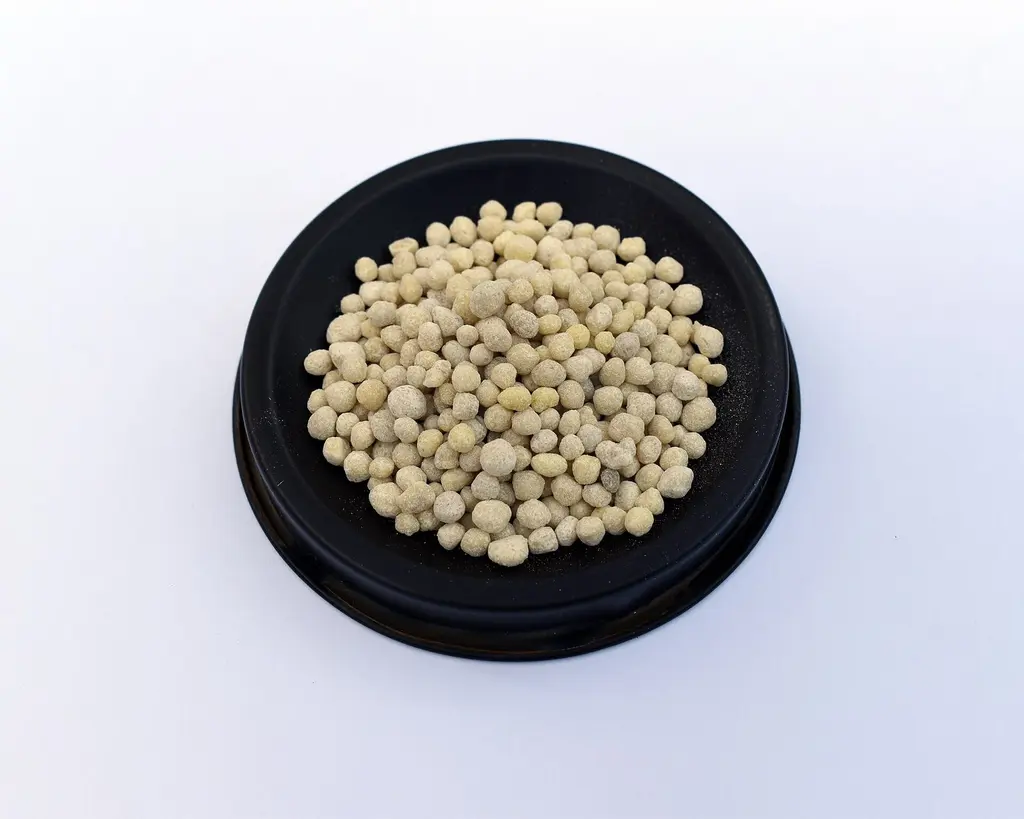
Frass is a phosphate story, not only a compost story. Nieto-Cantero et al. (Agronomy, August 2025) ran a 48-day lettuce pot trial in Seville and found black soldier fly and mealworm frass outperforming mineral superphosphate on a phosphorus-deficient calcareous soil.
Phosphorus mined from finite phosphate rock is easy to apply and easy to lock up. The paper, “Evaluation of Insect Farming Residue (Frass) as a Phosphate Fertilizer Within the Context of the Circular Economy”, is the dataset behind the comparison below.
What the study found
The team used lettuce (Lactuca sativa) and compared BSF frass (Hermetia illucens reared on olive mill pomace), mealworm (Tenebrio molitor) frass from wheat bran, vermicompost, standard superphosphate, and combinations.
| Treatment | Result recorded in the paper |
|---|---|
| Water-soluble inorganic P in BSF and mealworm frass | More than 30% of total P. Organic P over 50%. |
| Vermicompost water-soluble P | About 2.3% |
| pH | BSF frass ~8.97. Mealworm ~5.99. Vermicompost ~7.64. |
| Shoot dry biomass on pure mealworm frass | 90% higher than mineral phosphate only |
| Shoot P | Mealworm ~6.48 mg P/pot. BSF ~5.66 mg. Mineral fertilizer lower. |
| Mineral fertilizer replacement value (MFRV) | BSF ~150%. Mealworm ~180%. Vermicompost ~81.9%. |
| Soil Olsen-P | Mealworm ~18.22 mg P/kg vs mineral control ~13.02 mg/kg |
| Alkaline phosphatase | Highest under BSF frass, over 100% above the unfertilized control |
Root biomass also increased under frass, especially BSF frass, and root P accumulations were heavily boosted. Mealworm frass also raised alkaline phosphatase, though less than BSF frass.
A farm that already plans to sell frass still needs fertilizer licenses. That constraint is in how to start a black soldier fly farm.
Why It Matters
Reducing Reliance on Finite Mineral Phosphorus
Mineral P fertilizers are derived from finite phosphate rock reserves concentrated in few countries, creating supply risks and geopolitical concerns. Moreover, in calcareous or high-pH soils—which are widespread—applied mineral phosphorus often becomes quickly fixed in forms unavailable to plants, resulting in use efficiencies of only ~15–35%. Insect frass addresses both challenges: it supplies phosphorus recycled from organic sources, and because frass contains organic matter, it helps prevent fixation, maintaining more P in soluble or easily mineralizable forms.
Enhancing Circularity in Agriculture
Frass represents a key loop of circular agriculture. Insects consume organic waste (olive pomace, wheat bran, etc.), converting it into protein and frass. The frass, rich in both inorganic and organic phosphorus plus beneficial soil biology, returns nutrients to the soil. This reduces waste, lowers environmental burdens, and ideally cuts inputs of synthetic fertilizers.
Improving Soil Long-Term Health
Frass delivers multiple soil health benefits beyond just nutrient supply: organic matter input, increased enzyme activity, and enhanced microbial processes that drive P cycling. Such effects help sustain fertility across seasons, buffer stress, and improve organic matter content—potentially sequestering carbon, improving structure, water retention, and resilience. Mineral fertilizers usually don’t provide these benefits.
How This Fits Into Larger Trends in Insect Farming
Other studies in 2025 echo these results. For example, research shows frass improves plant resilience to abiotic stressors like drought or salinity and biotic threats, serving as a biostimulant and contributing to soil remediation. Another study of frass across multiple insect species found that frass properties—including nutrient content and microbial communities—varied significantly depending on species, and that heat treatments (for safety) reduce pathogens without eliminating beneficial soil microbiome effects.
These studies suggest frass is not a one-size-fits-all product: its effectiveness depends on insect species, larval diet, post-processing, and soil context. Still, the momentum is real: research labs, industry players, and policymakers are increasingly attending to frass as part of fertilizer regulation, climate policy, and sustainable agriculture frameworks.
Implications for BSF Farmers
If you’re farming BSF (or considering getting into it), here are key points to consider.
Feedstock & Diet
What you feed your BSF larvae dramatically influences the composition of the frass: phosphorus forms, due to both substrate chemistry and the insects’ digestion, and whether there may be unwanted compounds (e.g. salts, heavy metals). Feeding on safe, nutrient-rich byproducts yields frass likely to perform better and safer as fertilizer.
Processing & Safety
Regulations (for example in the EU under the Fertilizing Products Regulation) often require frass to be pasteurized or otherwise hygienized to ensure safety. Nieto-Cantero et al. used pasteurization at 70 °C for 60 minutes. Such protocols appear not to destroy the organic P or impair enzyme activity in a way that negates benefit (at least in short-term pot trials).
Measuring Efficacy Locally
Because soil type, pH, and existing phosphorus status strongly influence outcomes, it’s crucial to test frass in your own soil with your crops. Measure plant responses—biomass, P content—as well as soil health indicators like Olsen P, enzyme activity, and longer-term residual phosphorus. Small pilot trials can guide fertilizer rates and application schedules.
Potential for Value Addition
BSF farmers producing frass have a potential secondary revenue or cost saving stream: selling or using frass rather than treating it as waste. When frass yields replacement values above 100%, regions with high phosphate fertilizer costs may find frass a cost-effective alternative once logistics and processing are optimized.
Challenges, Unknowns & Next-Step Research
While results are promising, several caveats remain:
- Variability: Frass performance depends heavily on insect species, diet, environmental rearing conditions, and post-processing. What works in a Spanish pot trial may differ elsewhere.
- Scale & Field Trials: Pot experiments—even rigorous ones—don’t always translate directly to field scale. Long-term, field-based trials (multiple seasons, crop types, climate zones) are needed to validate sustainable yield gains and residual effects of organic P. Nieto-Cantero et al. call specifically for such work.
- Regulatory Hurdles & Market Adoption: Safety standards (pathogen control, heavy metal content), consistency of product, and acceptance from farmers accustomed to mineral fertilizers can pose barriers.
- Economic & Logistical Considerations: Cost of processing (pasteurization, drying, storage), transport to agricultural lands, and ensuring reliable supply must be considered.
Sources:
- Nieto-Cantero et al., “Evaluation of Insect Farming Residue (Frass) as a Phosphate Fertilizer Within the Context of the Circular Economy”, Agronomy, MDPI, August 2025: mdpi.com
- Research on frass as biostimulant and soil remediation, Applied Sciences, MDPI, 2025: mdpi.com
- Study on frass properties across insect species, PubMed: pubmed.ncbi.nlm.nih.gov
Frequently asked questions
What mineral fertilizer replacement values did Nieto-Cantero et al. report?
In a 48-day lettuce pot trial in Seville on phosphorus-deficient calcareous soil, BSF frass had an MFRV of about 150% and mealworm frass about 180% versus mineral superphosphate. Vermicompost was about 81.9%.
How did BSF and mealworm frass compare on phosphorus forms and plant P?
Water-soluble inorganic P in both BSF and mealworm frass was more than 30% of total P, with organic P over 50%. Vermicompost water-soluble P was about 2.3%. Shoot P was about 6.48 mg P/pot on mealworm frass and about 5.66 mg on BSF frass, both above mineral fertilizer. Pure mealworm frass produced 90% higher shoot dry biomass than mineral phosphate only.
What soil chemistry differences did the paper record?
BSF frass pH was about 8.97, mealworm about 5.99 and vermicompost about 7.64. Soil Olsen-P under mealworm frass was about 18.22 mg P/kg versus about 13.02 mg/kg for the mineral control. Alkaline phosphatase was highest under BSF frass, over 100% above the unfertilized control. Root biomass also increased under frass, especially BSF frass.
Did pasteurization destroy the phosphate benefit?
Nieto-Cantero et al. pasteurized frass at 70 °C for 60 minutes. Those protocols appear not to destroy the organic P or impair enzyme activity in a way that negates benefit, at least in short-term pot trials. EU fertilizing-product rules often require pasteurization or other hygienization.
What caveat does the paper itself raise?
Pot experiments do not always translate to field scale. The authors call specifically for long-term, field-based trials across seasons, crop types and climate zones to validate yield gains and residual effects of organic P. Frass performance also depends on insect species, diet, rearing conditions and post-processing.